
Purpose
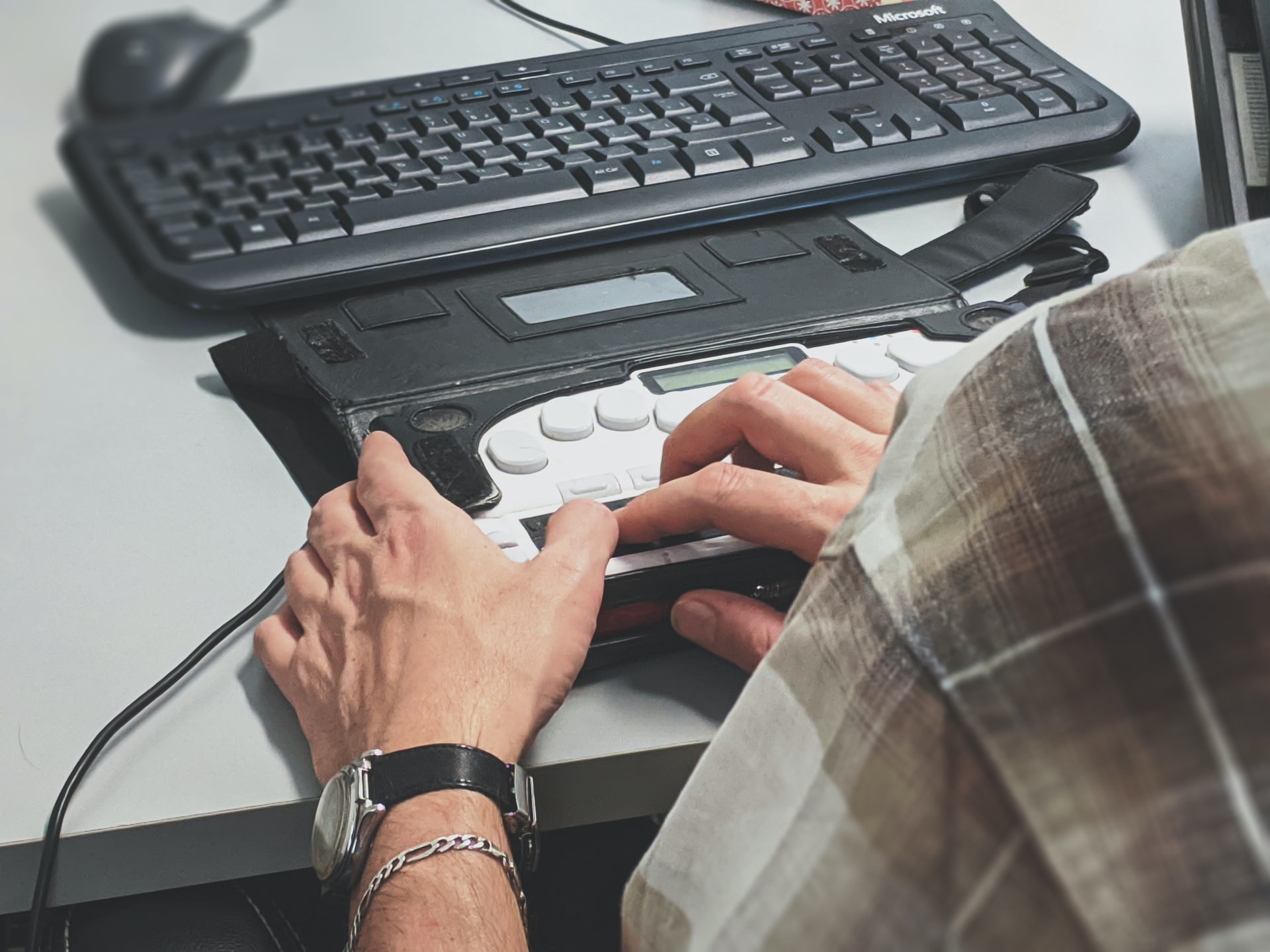
The primary purpose of this study is to determine which assistive technologies and mainstream technologies, together referred to as access technology (AT), are being utilized in the workplace and how they are being utilized by people who are blind or have low vision (B/LV). Because AT changes constantly, we will conduct a longitudinal survey of B/LV workers to assess these issues. A secondary purpose of the study is to compare AT use, skill, and self-efficacy among employed and unemployed people who are B/LV.
Project Outputs
McDonnall, M. C., Boydstun, J., & Steverson, A. (2026). Advantages of using refreshable braille devices at work. The New Re:View, 4(2), 84-89.
McDonnall, M. C., Boydstun, J., & Steverson, A. (2026). Use of wearable devices and generative AI in the workplace by people with visual impairments. Journal of Visual Impairment & Blindness, 120(2), 134-148.
McDonnall, M. C., Boydstun, J., & Steverson, A. (2025). Is one enough? Screen reader use among employed people who are blind or have low vision in the U.S. Disability and Rehabilitation: Assistive Technology, 20(8), 2725-2735.
McDonnall, M. C., & Sessler Trinkowsky, R. (2025). Assistive technology innovations: Perceptions, adoption, and desires. Assistive Technology Outcomes and Benefits, 19, 47-66.
McDonnall, M.C., Steverson, A., Boydstun, J., & D’Andrea, F.M. (2025). Factors associated with proficient braille skills in adults. Journal of Visual Impairment & Blindness, 111(2), 97-108.
McDonnall, M. C., Steverson, A., Trinkowsky, R. S., & Sergi, K. (2024). Assistive technology use in the workplace by people with blindness and low vision: Perceived skill level, satisfaction, and challenges. Assistive Technology, 36(6), 429-436.
Boydstun, J., McDonnall, M. C., & Steverson, A. (2024). Assistive Technology in the Workplace and Training Needs: Insights from Employed Young Adults who are Blind or Have Low Vision. Visual Impairment and Deafblind Education Quarterly, 69(4), 79-96.
McDonnall, M. (2024, Fall). Remote sighted assistance app use and thoughts about “sighted” assistance from artificial intelligence. AccessWorld. https://www.afb.org/aw/fall2024/ai-usage-research
McDonnall, M. C., Sessler-Trinkowsky, R., & Steverson, A. (2024). Use of braille in the workplace by people who are blind. Journal on Technology and Persons with Disabilities, 12, 58-75.
McDonnall, M. C., Steverson, A., & Boydstun, J. (2024). Actual and preferred methods for learning to use assistive technology. Assistive Technology Outcomes and Benefits, 18, 20-35.
McDonnall, M. C. (2023, December 19). Digital inaccessibility: Blind and low-vision people have powerful technology but still face barriers to the digital world. The Conversation. https://theconversation.com/digital-inaccessibility-blind-and-low-vision-people-have-powerful-technology-but-still-face-barriers-to-the-digital-world-212600
McDonnall, M. C., Sergi, K., & Steverson, A. (2023). Comparison of assistive technology use and beliefs among employed and unemployed people who are blind. The New RE:View, 1(2), 12-27.
McDonnall, M. C. (2023, Summer). Challenges with AT in the workplace: Accessibility issues top the list. AccessWorld. https://www.afb.org/aw/24/6/1836
McDonnall, M. & Steverson, A. (2023, Spring). Interest in and adoption of novel AT: Findings from the NRTC’s AT in the Workplace study. AccessWorld. https://www.afb.org/aw/24/5/18311
Steverson, A., McDonnall, M., & Sergi, K. (2022, May). What assistive technologies are used in the workplace? Initial research findings by NRTC on Blindness and Low Vision, Mississippi State University. AccessWorld. https://www.afb.org/aw/23/5/17939
Research Questions
- Which ATs do people who are B/LV most commonly use in the workplace?
- Which ATs do they use for specific work tasks?
- What factors influence decisions on which ATs to use when options are available?
- How do users learn to operate their AT? Does learning method vary by type of AT?
- How do users decide to adopt newly introduced AT?
- What are users’ perceived skill levels with the AT they utilize?
- How satisfied are people who are B/LV with the AT they use for specific work tasks?
- What are users’ levels of AT self-efficacy?
- Are there gaps in the AT that is available, and what is needed to accomplish work tasks?
- What are the greatest challenges people with B/LV experience when using AT in the workplace?
- How does AT use affect working relationships and interactions with sighted coworkers?
- How does the work environment affect AT use?
- Are some ATs more or less appropriate in certain work environments?
- How has AT use in the workplace changed over time?
- How does AT use, skill level, and self-efficacy differ among employed and unemployed people who are B/LV?
- Are AT skills and self-efficacy associated with obtaining employment?
Study Summary
Digital skills are increasingly important in the workplace, a trend that is expected to continue in the future. For people who are B/LV to be competitive in the labor market, it is imperative that they have digital skills, for which AT skills are a prerequisite. Appropriate AT in the workplace can be a great equalizer for people who are B/LV. Despite the importance of AT to employment for this population, we know little about how they use AT in the workplace or the challenges they experience.
In this longitudinal study, we will explore AT use in the workplace by people who are B/LV by conducting a series of surveys with the same sample of employed adults over the five-year period of the study. We will recruit 200 employed people to participate in this portion of the study. We are also interested in differences in the AT use and skills of B/LV people who are employed and unemployed and will recruit a sample of 100 unemployed people to participate in two surveys over the course of the study. We will also partner with technology companies to provide input on our surveys and share our findings with them.
Expected Outcomes and Benefits
This project will substantially advance knowledge about workplace AT, allowing us to make recommendations for AT users, technology companies, vocational rehabilitation professionals, AT specialists, and employers, and to identify gaps in AT – what is needed but not available. Our partnership with technology companies, including Microsoft, Google, Vispero, and OrCam, will provide an avenue to encourage the creation of solutions for gaps in AT identified in the study.