
Advisory Council Meets to Discuss the Rehabilitation Research and Training Center (RRTC) Grant

The National Research and Training Center (NRTC) on Blindness and Low Vision recently hosted an advisory council meeting for its new Rehabilitation Research and Training Center on Employment Among People Who Are Blind or Have Low Vision grant. The meeting, held on February 18 and 19 at Mississippi State University, brought together experts to ensure that research initiatives remain impactful and community-driven.
The council consists of experienced professionals dedicated to the blind and low vision community from multiple organizations including: Lea Rowe with Blinded Veterans Association (BVA), Carlos Servan representing National Council of State Agencies for the Blind (NCSAB), Richard Rueda with American Printing House for the Blind (APH), Megan Conway with the Helen Keller National Center for DeafBlind Youths & Adults (HKNC), Amy Porterfield with National Federation of the Blind (NFB), Jason Eckert with Vision Serve Alliance, Arielle Silverman with American Foundation for the Blind (AFB), Nancy Parkin-Bashizi representing Association for Education and Rehabilitation of the Blind and Visually Impaired (AER), Matt Wieseler with National Industries for the Blind (NIB), Scott Thornhill with American Council of the Blind (ACB), and Russell Shaffer with Disability:IN who is representing businesses on the council. Their primary role is to provide strategic guidance and support to NRTC staff regarding research and training activities funded by the National Institute on Disability, Independent Living, and Rehabilitation Research (NIDILRR) under the RRTC grant.
Project investigators presented information about seven major research projects under the new grant cycle. Each of these projects is specifically designed to improve employment opportunities and career outcomes for individuals who are blind or have low vision (B/LV), bridging the gap between research and real-world application.
Beyond research, the council reviewed current training, technical assistance, and website initiatives aimed at better information dissemination. The practical feedback provided by members will continue to shape our efforts as we move forward with our 2025–2030 grant activities and outreach goals.
Current Research Highlight: The Questions about Vision Loss Project
Individuals who are blind or have low vision (B/LV) continue to face barriers in the labor market. Often, the biggest hurdle isn't a lack of skill among job seekers, but rather a lack of understanding among employers. While research shows that education is the most effective way to dismantle workplace misconceptions, disability training is rarely part of standard workplace practice.
The primary goal of The Questions About Vision Loss (QAVL) Project is to encourage utilization of our interactive video intervention, Questions About Vision Loss (QAVL). QAVL features 117 short video responses to 41 common questions about blindness and employment, all answered by people with lived experience. In a previous study, we determined that viewing QAVL is associated with increased knowledge, attitudes, and intent to hire people who are B/LV.
Our research approach focuses on three strategic areas: partnering with four VR agencies to integrate QAVL into staff training and utilization for business development, collaborating with national organizations like Disability:IN and the Blind Institute of Technology to encourage their use of the video, and collaborating with one or more companies to implement QAVL as a training. We will also conduct an experimental study with 200 hiring managers to add to the evidence of QAVL’s effectiveness.
The goal of the project is to increase the utilization of QAVL in the real world, thereby reducing barriers to employment for people who are B/LV by directly addressing misconceptions about blindness and low vision, expanding employers' knowledge, and improving their attitudes.
Training and Technical Assistance
New Online Course
We have a new OIB-TAC course available! Sew Independent: Teaching Sewing to Individuals with Vision Impairment equips vision rehabilitation professionals with the foundational skills and strategies needed to teach basic hand sewing to adults with vision loss. Participants will learn adaptive techniques for threading needles, making essential stitches, and attaching buttons, while fostering confidence and independence in learners. This course is available for 2 ACVREP credits.
All courses are available through our learning management system. For more information about our courses, visit our Frequently Asked Questions page.
New Resources
Our Access Technology in the Workplace Study Final Report is now available to download. This report provides key findings from our Access Technology in the Workplace project. This 5-year longitudinal study examined how AT is used on the job, the challenges employees experience, and gaps between the technology needed and what is available in workplaces.
Highlights from the final report include:
- AT used by workers who are B/LV
- Trends and changes in AT use from 2021–2024
- Preferred and actual learning methods for AT
- Challenges faced by people with B/LV in the workplace
- What participants wished their AT could do
This report includes valuable information for professionals who work in the field and job seekers who are B/LV. Learn more about our AT in the Workplace Study on our project page.
Other NRTC News
Welcome Amanda Gochanour!
The NRTC is excited to welcome Amanda Gochanour as our newest Research Associate II! She will apply her data background to support the implementation of research studies under the guidance of senior researchers, manage and prepare data for analysis, and assist with virtual training activities, such as our Putting Your Best Foot Forward.
The NRTC is Hiring!
We are currently hiring a Communications Coordinator!
Looking for a communications role where your work truly matters? Join the National Research and Training Center on Blindness and Low Vision (NRTC) at Mississippi State University as our Communications Coordinator and help promote innovative research, training, and products that support individuals who are blind or have low vision across the country. Learn how to apply on MSU’s careers page here.
Researchers receive NIDILRR-funded best manuscript award
Congratulations to NRTC Director Michele McDonnall, Research Scientist Karla Antonelli, and MSU College of Business Instructor, Dr. Emily Marett, for winning NARRTC’s best NIDILRR-funded manuscript of 2025! Their manuscript investigating the QAVL video mentioned in the current research highlight, Improving Knowledge and Attitudes via an Interactive Video: A Randomized Controlled Trial, was selected for its novelty, importance, methodology, and high quality. They will travel to Alexandria, Virginia, on April 15 to accept the award at the annual NARRTC conference. We’re proud of our researchers and the meaningful work they do on behalf of people who are B/LV.
Read their award-winning publication here.
Help Shape Be My Mentor
Calling Be My Eyes Users & Volunteers (U.S. & Canada):
The NRTC on Blindness & Low Vision is conducting a research study to design Be My Mentor, a new Be My Eyes feature focused on short, one-time career-focused sessions for people who are blind or have low vision.
If you’re a Be My Eyes user or volunteer, age 18+, living in the U.S. or Canada, we’d love your input. Take a short survey here.
This study has been reviewed by Mississippi State University's HRPP and granted an Exemption Determination (Study # IRB-25-476).
New Advisory Board Spotlight: Q&A
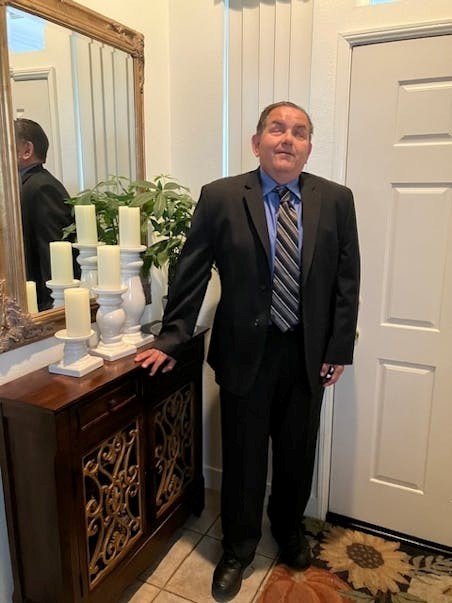
We’re thrilled to announce a new feature in our quarterly newsletter spotlighting our advisory council and consumer advisory panel members! Join us as we celebrate their expertise and contributions to our mission, while getting to know them a little better too!
Meet our Spring Spotlight: Richard Rueda with American Printing House for the Blind (APH).
1. From your perspective, what are the biggest challenges people who are blind or have low vision still face when entering or advancing in the workforce today?
There are a few key threads here. First and foremost is reliable, accessible transportation to and from the workplace. Remote work helps when it is available and appropriate, but it only benefits a relatively small portion of the blind workforce.
The second major barrier is access to fully compliant and accessible technology. Many blind professionals can only access portions of proprietary or in-house systems, and often have to engineer workarounds just to stay competitive. That takes time, energy, and frankly, a lot of patience.
Then there is the human side of it. Confidence and self-belief can take a hit. When someone is underemployed or out of the workforce for extended periods, it can chip away at their sense of belonging and their belief that they can contribute in meaningful ways. That piece is just as real as any structural barrier.
2. How do you see research—like the work coming out of NRTC—making the greatest impact on employment outcomes in real-world settings?
Research builds trust. The more accessible and widely shared it is with corporations and institutions, the more confidence employers have in hiring and investing in blind and low vision professionals. When research reaches HR teams and hiring managers, it helps shift perspectives from uncertainty to opportunity. It highlights what success actually looks like in the workplace.
And when that same research is shared with rehabilitation agencies and service providers, it leads to stronger training programs and more informed support strategies. When research is not just produced but actually used, that is where the real impact happens.
“When research is not just produced but actually used, that is where the real impact happens.”
3. What strategies or resources have you found most effective in helping individuals who are blind or low vision prepare for and succeed in their careers?
APH CareerConnect is a fantastic resource. It offers guidance, tools, and real-world insights for people exploring career paths or actively job seeking.
Beyond tools, mentorship is key. Whether formal or informal, having someone in your corner who has been there before can make all the difference. It is like having a career coach and a trusted advisor rolled into one. Independence matters, but interdependence is just as important.
I can say from personal experience that without the blind mentors in my life, I would not have had the career I have today, now spanning over twenty-five years.
And finally, get out there. As comfortable as home and the computer can be, growth happens in community. Conferences, networking events, mixers, and community gatherings matter. Visibility leads to opportunity. The more people know you and your strengths, the more doors tend to open.
“Visibility leads to opportunity. The more people know you and your strengths, the more doors tend to open.”
4. What advice would you give to service providers or agencies working to better support employment outcomes for people with vision loss?
Hire more blind professionals. Not just as participants, but as staff, mentors, and leaders across all levels of the organization.
Representation matters, and it has a direct impact on outcomes. When blind individuals are part of the team delivering services, it strengthens credibility, improves training, and ultimately leads to better employment results.
“Representation matters, and it has a direct impact on outcomes.”
5. What motivates you most about the work you do in this field?
I am a connector by nature.
I genuinely enjoy bringing people and resources together in meaningful ways. At times I feel like a matchmaker, pairing talented job seekers with the right opportunities and helping organizations recognize the value of that talent.
For over twenty-five years, I have worked alongside underserved communities, helping connect people to tools, resources, and opportunities that can truly change lives. That is what keeps me going.
To learn more about APH CareerConnect and American Printing House for the Blind (APH), click here to visit their website.
Publications, Presentations, and Miscellanies
Publications
McDonnall, M. C., Boydstun, J., & Steverson, A. (2026). Use of wearable devices and generative AI in the workplace by people with visual impairments. Journal of Visual Impairment & Blindness. Advance online publication.
Ottowitz, J., Farrow, K., & Speights, L. (2026). Voices from the Field: Perspectives of professionals about older blind services. The New RE:view, 4(1), 26-34. https://doi.org/10.56733/TNR.24.021
Welch-Grenier, S. (in press). Optimizing resources: Enhancing rehabilitation for older adults with vision loss through effective retreat training models. Journal of Visual Impairment & Blindness.
Presentations
McDonnall, M., & Welch-Grenier, S. (2026, April 1-3). Innovative research and training activities by the NRTC. National Council of State Agencies for the Blind Conference, Washington, DC.
McDonnall, M., & Antonelli, K. (2026, April 14-15). Improving knowledge and attitudes via an interactive video: A randomized controlled trial. [2026 Best Paper Panel Session]. NARRTC, Washington, DC.
Webinars
April 17 (2:00 pm CT) – What does service provision for older adults who are blind in Alaska look like—and what can the rest of us learn from it?
Join a panel of Alaskan service providers as they explore the realities of working across vast distances, navigating transportation barriers, and building trust in tight-knit communities. Panelists will discuss strategies for reducing stigma, strengthening partnerships between state and tribal VR programs, and engaging community resources to ensure older adults receive meaningful, culturally responsive support. Available for 1 ACVREP credit. To learn more and register, visit our event page.