
OIB-TAC Conference Sparks Innovation and Collaboration Among Program Managers
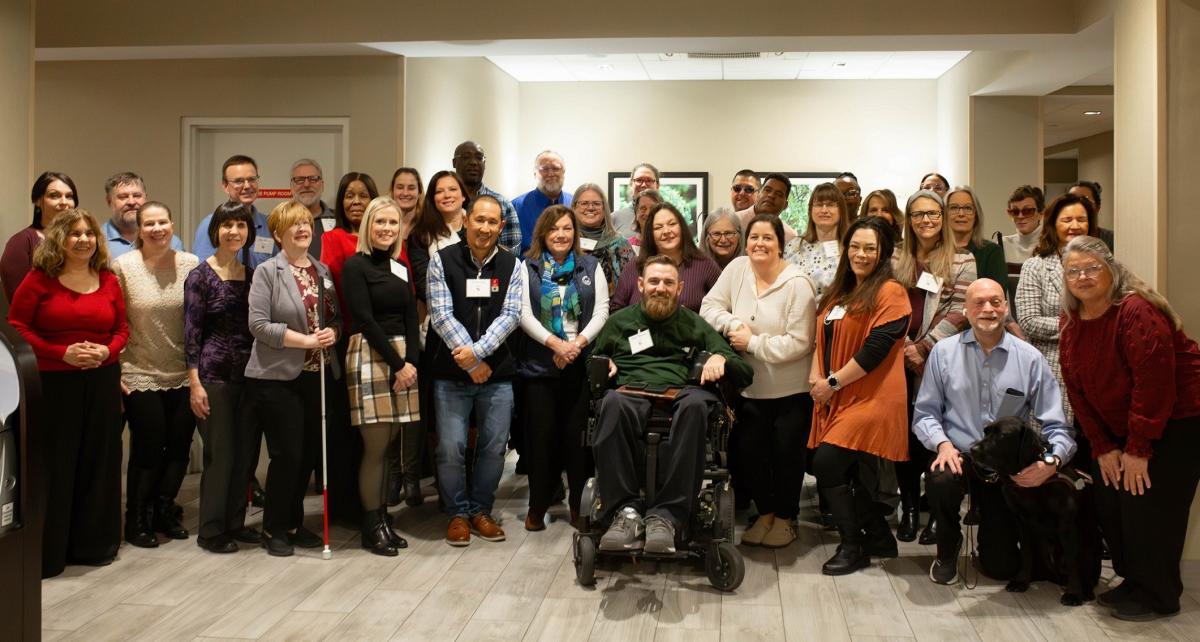
The 2025 OIB-TAC Conference, held on February 26-27 in Arlington, Virginia, brought together OIB program managers from 32 states for two days of learning, collaboration, and networking. The event provided a platform for managers to explore different service models, engage in interactive discussions, and gain a national perspective on OIB services. Attendees participated in sessions that covered data-driven insights, leadership development, and team-building strategies, helping them strengthen their programs and refine their leadership approaches.
Breakout groups encouraged knowledge sharing among managers, allowing them to discuss challenges, exchange best practices, and consider new approaches for improving services. One engaging session, "Leveraging Talking Books to Enhance Services," provided hands-on interaction with resources designed to support individuals who are blind or have low vision (B/LV).
The conference concluded with reflections and program highlights, reinforcing the power of collaboration and shared learning. This year's return of breakout groups was particularly impactful, offering managers a dedicated space to explore innovative solutions and discuss strategies for making their programs more effective. Attendees left Arlington energized and equipped with new insight, ready to implement innovative strategies to enhance their programs nationwide. Read our news item for more information about the conference.
Current Research Highlight: Interactive Video for Employers
Negative employer attitudes are a significant barrier to employment for people with B/LV. To address misconceptions and improve employer knowledge and attitudes, we developed an interactive educational video, called Questions About Vision Loss (QAVL), featuring a rehabilitation professional who is blind. This video allows viewers to explore topics related to employing people with B/LV by selecting questions that interest them, creating a personalized learning experience.
Over the past year, we completed the second efficacy study to assess the impact of viewing the interactive video on employer knowledge, attitudes, and hiring intentions. The efficacy study was a randomized controlled trial, comparing the effect of viewing QAVL to viewing another interactive video. Data collection occurred across multiple sites and organizations, including the Golden Triangle Society for Human Resource Management (SHRM), the U.S. Army Corps of Engineers, and Mississippi State University (MSU). Results demonstrated significant improvements in knowledge about, attitudes toward, and intent to hire employees who are B/LV for participants who viewed QAVL.
We have been preparing QAVL for general release. Accessibility improvements were made to ensure all elements were compatible with screen readers, and additional video segments were added, including an introduction, an exit option, and a feature highlighting a deafblind doctor. QAVL has been approved for SHRM professional development credits.
Additionally, we have submitted two manuscripts detailing our findings—one of which has been accepted for publication in Rehabilitation Psychology and one in the Journal of Visual Impairment & Blindness. We are now finalizing promotional materials and the online platform where SHRM professionals can access the video and earn credits.
For more information about this research project, visit our research project webpage.
Training and Technical Assistance
New Article Summaries
The NRTC has two new summaries of our recent articles, Predictors of Job Retention After Onset of Visual Impairment in Late Middle Age and Employment and Retirement Among Workers Who Develop Vision Loss in Midlife. To learn more about the findings of these research studies in plain language and their key takeaways, visit the Article Summaries page on our website.
New Social Media Series
The NRTC has two new social media series designed to feature long-standing tools and courses for professionals who work with B/LV individuals. Each month, Resource Wednesday will highlight a free resource available on our website, while Spotlight on Learning will feature an existing course from our catalog that remains relevant and valuable. Read our news item to learn more.
Featured Resource
A Transportation Guide for Persons who are Blind or Have Low Vision contains helpful information about finding and using transportation options. It is designed for people with B/LV or those who serve them. When beginning a new job, vocational rehabilitation or another agency may provide transportation assistance, but this support is typically limited. It is ultimately the individual’s responsibility to make travel arrangements and determine the best way to get to and from work. Expending the time and effort to learn the possible options is essential to finding the ride that best suits one’s needs.
Featured Course
Gearing up for Transit: The goal of this course is to provide information that blindness professionals and advocates can use to help people who are B/LV increase their confidence as transportation consumers as well as their ability to advocate on behalf of themselves on a day-to-day basis and on behalf of more systemic change when it is needed. This course is available for 1 CRC, ACVREP, and NBPCB credit.
Other NRTC News
Envision Conference
OIB-TAC Project Director Kendra Farrow and Older Blind Specialist Jennifer Ottowitz will present at the Envision Conference on May 30th. Their presentation, Dual Sensory Impairment: How Hearing Impacts Adaptions for Vision Impairments, will address the specialized needs of those with dual sensory loss. Standard adaptations recommended to those with visual impairment may not be appropriate. In this session, challenges for those with dual sensory loss will be explored, along with tips for communication and adaptations that address the combined impairments. To learn more about the conference and to view the agenda, visit their website.
Follow the NRTC on YouTube and Instagram
The NRTC is on YouTube and Instagram! Be sure to subscribe to our YouTube channel and Instagram for videos, webinars, and other information related to B/LV.
Publications, Presentations, and Miscellanies
Publications
McDonnall, M. C., Antonelli, K., Schultz, E., & Marett, E. G. (in press). Generational differences in attitudes and knowledge about workers who are blind or have low vision. Journal of Visual Impairment & Blindness.
McDonnall, M. C., Antonelli, K., & Marett, E. G. (in press). Improving knowledge and attitudes via an interactive video: A randomized controlled trial. Rehabilitation Psychology.
McDonnall, M. C., & Sessler-Trinkowsky, R. (in press). Assistive technology innovations: Perceptions, adoptions, and desires. Assistive Technology Outcomes and Benefits.
Presentations
Welch-Grenier, S. (2025, April 15). Transitioning to life after school: Prepare for your next steps. Family University, Ohio Deaf and Blind Education Services, Virtual Webinar Series.
Farrow, K., & Ottowitz, J. (2025, May 30). Dual sensory impairment: How hearing impacts adaptations for vision impairment. Envision Conference, Dallas, TX.
Welch-Grenier, S. (2025, May). Tips for providing inclusive programming for seniors with vision impairments. National Council on Aging: Age+Action Conference, Arlington, VA.
Webinars
April 25 (2:00 pm CST) – Exploring Effective Models for Retreat Training: Are you for an innovative and effective way to help older adults navigate their daily lives with confidence and independence while maximizing staff time and resources? Join us for an enlightening webinar focused on Retreat Training Programs specifically designed for OIB consumers. Learn about three unique retreat-style programs: New Jersey's A Shore Thing, Virginia's Senior Retreat, and Wisconsin's Adventures in Vision Loss Program. Discover what these programs have in common and what sets them apart, including their implementation methods, duration, structure, and more! We do not offer CE credits for our monthly webinars. To learn more and register, visit our event page.